
Understanding Partial Rotator Cuff Tears: Causes, Symptoms, and Treatment Options
Shoulder pain and discomfort can significantly impact daily activities and quality of life. Among the various shoulder conditions, partial rotator cuff tears represent a common yet often misunderstood issue that affects millions of people worldwide. These tears occur when the tendons inside the shoulder experience wear and deterioration, frequently as a natural consequence of aging. Understanding the nature of these tears, their symptoms, and available treatment options is essential for anyone experiencing shoulder discomfort or those who have received a diagnosis following medical imaging.
The complexity of partial rotator cuff tears lies in their variable presentation. While some individuals experience significant pain and functional limitations, others may have substantial tears without any noticeable symptoms. This variability makes diagnosis and treatment planning challenging, requiring careful evaluation by healthcare professionals who can distinguish between tears that require intervention and those that can be managed conservatively or simply monitored over time.
Anatomy of the Rotator Cuff Structure
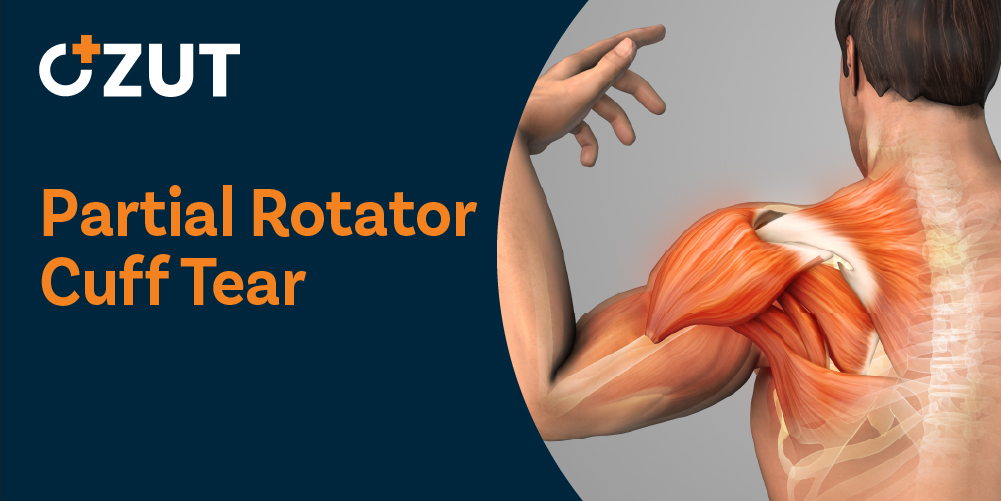
The rotator cuff represents a critical anatomical structure within the shoulder joint, consisting of four distinct muscles that work together to facilitate arm movement and shoulder stability. These muscles originate from the shoulder blade and transition into tendons that attach to the upper arm bone near the shoulder socket. When these muscles contract, they generate force that pulls on the tendons, which in turn move the arm bone, enabling the wide range of motion that characterizes healthy shoulder function.
Each of the four rotator cuff muscles contributes a corresponding tendon, creating a network of connective tissue that surrounds the shoulder joint. These tendons measure approximately one centimeter in thickness, comparable to the width of a small finger, and span two to three centimeters in width. They attach to the upper portion of the arm bone near the joint, forming a cuff-like structure that gives this anatomical feature its name. The positioning and interconnection of these tendons allow for the complex movements required in daily activities, from reaching overhead to rotating the arm.
The Role of Tendons in Shoulder Movement
Tendons serve as the crucial link between muscle and bone, transmitting the force generated by muscle contractions to create movement. In the shoulder, this relationship is particularly important due to the joint’s exceptional mobility and the demands placed upon it during various activities. The rotator cuff tendons must withstand considerable stress while maintaining flexibility and strength, making them susceptible to wear over time.
Age-Related Changes in Rotator Cuff Tendons
The aging process brings inevitable changes to the rotator cuff tendons, with degenerative alterations typically beginning around age thirty and progressively increasing thereafter. These changes represent a normal part of human aging, similar to other age-related modifications throughout the body. Initially, these alterations occur at the microscopic level, invisible to the naked eye but potentially detectable through advanced imaging techniques.
Medical imaging, particularly magnetic resonance imaging scans, can reveal these early degenerative changes. Radiologists examining these scans identify such changes as tendinosis, a term describing the structural modifications that occur within the tendon tissue as part of the natural aging process. Importantly, tendinosis does not necessarily indicate a pathological condition requiring treatment. Many individuals with tendinosis visible on imaging studies experience no pain or functional limitations, highlighting the distinction between anatomical changes and clinically significant problems.
Understanding Tendinosis
Tendinosis represents the earliest stage of tendon degeneration, characterized by changes in the tissue structure and composition. These modifications include alterations in collagen organization, changes in cellular activity, and variations in the tendon’s mechanical properties. While tendinosis may eventually progress to partial or complete tears, many people live their entire lives with tendinosis that never causes symptoms or requires intervention.
Causes and Development of Rotator Cuff Tears
The exact mechanisms underlying rotator cuff tear development remain incompletely understood, though strong associations with aging have been established. By the time individuals reach sixty years of age, statistical evidence suggests that a significant proportion have developed either partial or complete rotator cuff tears, regardless of whether symptoms are present. This high prevalence underscores the relationship between aging and tendon degeneration.
Historical theories proposed that rotator cuff tears resulted from tendons repeatedly striking against bone spurs during shoulder movement. However, contemporary research has largely discredited this mechanical explanation. Current understanding recognizes that tears develop across diverse populations, affecting people in various occupations and with different activity levels. This universal occurrence supports the conclusion that rotator cuff changes represent a natural aspect of aging rather than the result of specific mechanical stresses or occupational hazards.
Tears in Younger Individuals
While rotator cuff tears predominantly affect older adults, younger individuals, particularly those under thirty-five years of age, can also develop partial tears. In these cases, tears often associate with specific injuries or repetitive overhead activities. Athletes who perform sports requiring repeated overhead arm movements, such as baseball pitchers, swimmers, and tennis players, face increased risk for developing partial rotator cuff tears. Despite the different etiology in younger patients, treatment approaches generally mirror those used for age-related tears in older adults.
Distinguishing Partial from Complete Tears
Understanding the difference between partial and complete rotator cuff tears is essential for appropriate diagnosis and treatment planning. A partial tear penetrates only partway through the tendon thickness, typically described in terms of depth rather than length or width. These tears can range from very shallow, affecting only ten percent of the tendon thickness, to deep tears involving fifty percent or more of the tendon depth.
In contrast, a complete or full-thickness tear extends entirely through the tendon, creating a gap in the tissue. This distinction carries important implications for treatment decisions and prognosis. Radiologists examining imaging studies must carefully evaluate the extent of tendon damage, distinguishing between tendinosis, partial tears, and complete tears. This assessment requires considerable expertise and experience, as the differences can be subtle on imaging studies.
Challenges in Imaging Interpretation
Interpreting shoulder imaging studies presents significant challenges even for experienced radiologists. The distinction between tendinosis and partial tears, or between partial and complete tears, is not always clear-cut. Image quality, patient positioning, and the specific imaging sequences used all influence the ability to accurately characterize tendon pathology. This inherent uncertainty emphasizes the importance of correlating imaging findings with clinical symptoms and physical examination results.
Clinical Symptoms and Presentation
The clinical presentation of partial rotator cuff tears varies considerably among affected individuals. Many people with partial tears identified on imaging studies experience no symptoms whatsoever, continuing their normal activities without awareness of the underlying tendon damage. For those who do develop symptoms, pain represents the primary complaint, typically localized to the shoulder region.
The pattern of pain associated with partial rotator cuff tears often follows predictable patterns. Activities involving lifting objects above shoulder level or extending the arm away from the body typically provoke the most significant discomfort. These movements place substantial stress on the rotator cuff tendons, exacerbating symptoms in individuals with partial tears. Conversely, many activities that might be expected to cause problems, including running, cycling, swimming, and weight training, often can be performed without difficulty.
Activity Modification and Pain Management
When specific activities provoke shoulder pain, temporary modification or reduction of those activities may provide relief. However, current evidence does not support the notion that continuing activities despite mild discomfort will necessarily worsen the underlying tear or lead to progression. This understanding allows individuals to maintain active lifestyles while managing symptoms through appropriate modifications and pain control strategies.
Diagnostic Approaches and Imaging Studies
Magnetic resonance imaging represents the primary diagnostic tool for identifying partial rotator cuff tears. These advanced imaging studies provide detailed visualization of soft tissue structures, including the rotator cuff tendons, allowing radiologists to assess the presence and extent of tears. However, the identification of a tear on imaging does not automatically establish it as the source of shoulder pain, a critical distinction that influences treatment decisions.
Several conditions can produce symptoms similar to those caused by rotator cuff tears, potentially leading to diagnostic confusion. Shoulder stiffness, sometimes referred to as frozen shoulder, represents the most common condition that mimics rotator cuff pathology. This condition manifests as reduced range of motion, with the shoulder moving only within a limited arc before pain develops. Patients frequently develop shoulder stiffness and pain without any precipitating injury, making differentiation from rotator cuff tears challenging.
Incidental Findings and Clinical Correlation
When imaging studies reveal tendinosis or partial tears that do not correlate with the patient’s symptoms or physical examination findings, these discoveries are termed incidental findings. Such findings, while anatomically present, may have no relationship to the patient’s actual problem. This phenomenon highlights the critical importance of comprehensive clinical evaluation rather than relying solely on imaging results for diagnosis and treatment planning.
Visual Characteristics of Partial Tears
As tendinosis progresses, the degenerative changes eventually become visible without magnification. When tendons begin to tear, they develop an appearance similar to a fraying rope, with individual fibers splitting and separating. This visual characteristic helps surgeons identify and assess tears during surgical procedures, though most partial tears are diagnosed through imaging rather than direct visualization.
The prevalence of partial rotator cuff tears in the general population is remarkably high. Research studies examining imaging results from individuals over sixty years of age have found that more than half demonstrate partial tears of their rotator cuff tendons, despite never experiencing symptoms or seeking medical attention for shoulder problems. This high prevalence of asymptomatic tears reinforces the concept that partial tears represent a common age-related finding rather than necessarily indicating a pathological condition requiring treatment.
Clinical Significance and Treatment Necessity
The discovery of a partial rotator cuff tear on imaging studies typically does not warrant concern, particularly in individuals over forty years of age. These findings are so common in this age group that they are essentially considered a normal variant of aging. The key determinant of clinical significance is not the presence of the tear itself, but rather whether it causes symptoms or functional limitations.
For asymptomatic partial tears discovered incidentally during imaging performed for other reasons, no treatment is necessary. The tear can be safely monitored, with intervention considered only if symptoms develop. This conservative approach reflects the understanding that many partial tears never progress or cause problems, making aggressive treatment unnecessary and potentially harmful.
Non-Surgical Treatment Strategies
When partial rotator cuff tears cause pain or functional limitations, several non-surgical treatment options are available. The primary goals of conservative treatment include maintaining shoulder range of motion, preventing stiffness, and controlling pain. These objectives can typically be achieved through a combination of self-directed interventions and professional guidance.
Home-Based Management Techniques
Daily stretching exercises represent a cornerstone of conservative management, with five minutes of gentle stretching recommended to prevent shoulder stiffness. These exercises should be performed consistently to maintain flexibility and range of motion. Ice application provides effective pain relief, with sessions lasting twenty to thirty minutes applied as frequently as every two hours when needed. The cold therapy reduces inflammation and numbs pain, offering temporary but significant relief.
Oral medications, including over-the-counter pain relievers and anti-inflammatory drugs, can help control symptoms and improve function. These medications should be used according to package directions or as prescribed by healthcare providers. For more persistent or severe pain, corticosteroid injections into the bursa near the rotator cuff tendons may be recommended. These injections reduce inflammation and can provide substantial pain relief, though their effects are typically temporary.
Physical Therapy Interventions
When home-based treatments prove insufficient, formal physical therapy offers additional benefits. Physical therapists design individualized exercise programs targeting pain reduction, strength improvement, and range of motion enhancement. The therapeutic exercises focus on strengthening the rotator cuff muscles and surrounding shoulder structures, improving overall shoulder function and stability.
An important aspect of physical therapy involves addressing shoulder stiffness, which may be the primary source of pain rather than the partial tear itself. Therapists employ various techniques to improve mobility and reduce stiffness, potentially resolving symptoms even when partial tears remain present. All