
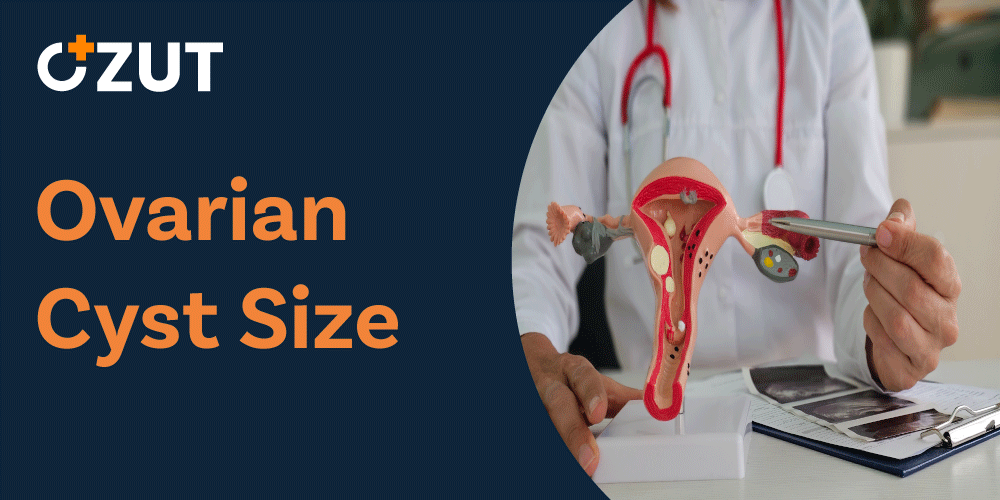
Understanding Ovarian Cysts: Types, Sizes, and Treatment Options
Ovarian cysts are fluid-filled sacs that can form in or on the ovaries. While most are benign (noncancerous) and resolve on their own without intervention, some types can grow large and may require medical attention. These cysts typically form due to hormonal changes, pregnancy, or underlying health conditions like endometriosis.
Most individuals with ovaries will develop at least one cyst during their lifetime. In fact, functional ovarian cysts are considered a normal part of the menstrual cycle. However, understanding the different types of cysts, their typical sizes, and potential treatment options can help you better manage your reproductive health.
Types of Ovarian Cysts and Their Typical Sizes
Ovarian cysts come in various forms, each with different characteristics and potential sizes. Size is an important factor that healthcare providers consider when determining whether a cyst requires surgical intervention. Let’s explore the most common types of ovarian cysts and their usual dimensions.
Functional Cysts
Functional cysts form during the normal menstrual cycle and typically resolve on their own within a few weeks. These are the most common type of ovarian cysts and are generally harmless. However, in some cases, they can continue growing and cause discomfort.
There are two main types of functional cysts:
- Follicular Cysts : These form when a follicle (a small sac that contains an egg and produces estrogen) doesn’t release the egg during ovulation as expected. Instead, the follicle continues to grow, creating a cyst. Follicular cysts typically measure larger than 2.5 centimeters (cm) in diameter, which is approximately 0.98 inches.
- Corpus Luteum Cysts : After ovulation, the empty follicle sac normally shrinks. However, sometimes it becomes sealed off and fills with fluid, forming a corpus luteum cyst. These cysts usually grow to about 3 cm (approximately 1.18 inches) in diameter. In some cases, they can reach sizes larger than 10 cm (about 4 inches), potentially requiring surgical removal.
Dermoid Cysts
Dermoid cysts, also known as teratomas, are a type of ovarian tumor that contains different tissue types such as skin, hair, and fat. Though classified as tumors, they are almost always benign and often present from birth.
These cysts have the potential to grow quite large. Research indicates that some dermoid cysts can grow rapidly, increasing by up to 64 millimeters in size. The growth rate and ultimate size can vary significantly between individuals.
Cystadenomas
Cystadenomas are benign tumors that develop on the surface of the ovaries. They can be filled with either a watery liquid or a mucus-like substance.
When examined via ultrasound, cystadenomas often resemble functional cysts. The key difference is their persistence—while functional cysts typically disappear after several menstrual cycles, cystadenomas continue to grow.
These cysts have significant growth potential and can become quite large if left untreated. Their persistent growth pattern is one reason healthcare providers may recommend surgical removal, even when they’re benign.
Endometriomas
Endometriomas form as a result of endometriosis, a condition where tissue similar to the uterine lining grows outside the uterus. When this tissue attaches to the surface of an ovary, it can form a cyst.
While endometriomas are typically small, they can vary considerably in size. These cysts are often associated with pelvic pain, particularly during menstruation, regardless of their size.
When Do Ovarian Cysts Require Treatment?
Not all ovarian cysts require treatment, and many resolve spontaneously. For this reason, healthcare providers often recommend a period of watchful waiting to monitor the cyst over one or two menstrual cycles to see if it disappears on its own.
Managing Cyst Discomfort
If you experience discomfort from an ovarian cyst, your healthcare provider may suggest over-the-counter pain medications to help alleviate symptoms. Common options include:
- Nonsteroidal anti-inflammatory drugs (NSAIDs)
- Acetaminophen
- Other pain relievers as recommended by your healthcare provider
These medications can help manage pain while waiting to see if the cyst resolves naturally. In some cases, hormonal birth control may be prescribed to prevent new cysts from forming, though this approach won’t shrink existing cysts.
Surgical Intervention
Sometimes, an ovarian cyst may require surgical removal. This might be necessary when a cyst:
- Is large or continues to grow
- Doesn’t disappear on its own after several menstrual cycles
- Causes acute pain
- Appears abnormal or potentially cancerous on ultrasound
The removal of ovarian cysts is often accomplished using minimally invasive methods such as laparoscopy. This procedure involves making small incisions through which specialized instruments and a camera are inserted to remove the cyst.
However, more invasive open surgery may be necessary in certain situations, particularly when a cyst is very large or when cancer is suspected. The specific surgical approach will depend on various factors, including the size and nature of the cyst, as well as the patient’s overall health.
Size Considerations for Ovarian Cysts
The size of an ovarian cyst is one of several important factors that healthcare providers consider when determining the appropriate course of action. While size alone isn’t always indicative of a problem, it can help guide treatment decisions.
What Size Is Considered Concerning?
Healthcare providers may become concerned about an ovarian cyst based on its size, though this is just one of several factors they consider. Generally, cysts measuring more than 5 cm (about 2 inches) in diameter might warrant closer monitoring or intervention, depending on other characteristics and symptoms.
Very large cysts—those measuring 10 cm (about 4 inches) or more—often require surgical evaluation and possible removal due to the increased risk of complications such as torsion (twisting) of the ovary or rupture of the cyst.
Is a 4 cm Cyst Large?
A 4 cm (approximately 1.5 inch) ovarian cyst falls into a middle range. It’s larger than the typical functional cyst but not necessarily large enough to automatically warrant surgical intervention. The management of a cyst this size would depend on additional factors such as:
- The type of cyst
- Whether it’s causing symptoms
- How it appears on imaging studies
- Whether it’s growing over time
Your healthcare provider might recommend monitoring a cyst of this size over several menstrual cycles to see if it resolves on its own before considering more invasive options.
What Is Considered a Normal Cyst Size?
People with ovaries typically develop functional cysts during their menstrual cycle, often measuring larger than 2.5 cm (0.98 inches). These cysts are considered normal and usually disappear on their own within a few weeks or months.
If cysts do not resolve or continue to grow during subsequent menstrual cycles, a healthcare provider may recommend additional tests to determine the type of cyst and the most appropriate management approach.
Monitoring and Follow-up Care
Regular monitoring is an important aspect of managing ovarian cysts, particularly those that aren’t immediately treated surgically. Your healthcare provider may recommend follow-up ultrasounds at specific intervals to track any changes in the cyst’s size or appearance.
When to Seek Medical Attention
While many ovarian cysts are harmless and resolve without intervention, certain symptoms warrant immediate medical attention. These include:
- Sudden, severe abdominal or pelvic pain
- Pain accompanied by fever or vomiting
- Symptoms of shock, such as cold, clammy skin, rapid breathing, or weakness
These symptoms could indicate complications such as cyst rupture, ovarian torsion, or infection, which require prompt medical evaluation and potentially emergency treatment.
Living with Ovarian Cysts
For many individuals, ovarian cysts are a temporary condition that resolves without significant impact on daily life or fertility. However, recurrent or persistent cysts may require ongoing management strategies.
Maintaining regular gynecological check-ups is essential for early detection and management of ovarian cysts. During these visits, your healthcare provider can perform physical examinations and, when necessary, imaging studies to monitor your reproductive health.
Lifestyle modifications such as maintaining a healthy weight, regular exercise, and stress management techniques may help manage symptoms associated with certain types of ovarian cysts, particularly those related to conditions like polycystic ovary syndrome (PCOS) or endometriosis.
Conclusion
Most people with ovaries will develop ovarian cysts at some point during their lifetime. Functional ovarian cysts, which are a normal part of the menstrual cycle, typically don’t cause symptoms and usually resolve within a few weeks without intervention.
Other types of cysts, such as dermoid cysts, cystadenomas, and endometriomas, are less common but may require closer monitoring due to their potential for continued growth.
While the size of an ovarian cyst is an important consideration in determining the need for treatment, it’s just one of several factors that healthcare providers evaluate. Most cysts don’t require surgical removal, but surgery may be recommended for those that are large, persistent, painful, or appear abnormal on imaging studies.
If you’re concerned about ovarian cysts or experiencing symptoms that might be related to them, consult with a healthcare provider for proper evaluation and guidance. With appropriate monitoring and management, most individuals with ovarian cysts can maintain good reproductive health and overall wellbeing.