Understanding How Abortion Affects Your Menstrual Cycle
The impact of abortion on your menstrual cycle varies based on several factors, including the type of abortion procedure and your typical menstrual patterns. Understanding these effects can help you know what to expect during your recovery process and when your body will return to its normal rhythms.
How Abortion Restarts Your Menstrual Cycle
An abortion essentially restarts your menstrual cycle. Most individuals can expect their periods to return within 4–6 weeks following the procedure. The exact timing depends partly on how far along the pregnancy was before termination. Pregnancy hormones may remain in your system for several weeks afterward, which can delay the return of menstruation.
Your first post-abortion period might differ from your typical menstrual experience. If you had a procedural abortion (sometimes called surgical abortion), your first period may be shorter than usual. Conversely, if you had a medication abortion, your first period might be longer. These irregularities occur because your hormones are readjusting and your menstrual cycle is reestablishing itself.
Characteristics of Post-Abortion Periods
First Period After Medication Abortion
If you underwent a medication abortion, your first period might be heavier than usual. This happens because your body needs to remove any remaining tissue from the uterus. You might also pass some small blood clots during this time, which is generally normal.
First Period After Procedural Abortion
Following a procedural abortion, your initial periods may actually be lighter than you’re accustomed to. Your menstrual cycle should regulate itself within a few months as your body adjusts.
It’s important to note that any blood or discharge you experience shouldn’t have a foul odor. If you notice any unpleasant smell from your discharge, this could indicate an infection, and you should contact a healthcare professional promptly.
Common Menstrual Symptoms
You may experience more intense cramping than usual during your first few post-abortion periods. Other symptoms will likely be similar to those you’ve experienced during previous menstrual cycles, including:
- Bloating
- Headaches
- Breast tenderness
- Muscle aches
- Mood changes
- Fatigue
Managing Your Period After Abortion
Recommended Period Products
Healthcare professionals typically recommend avoiding internal period products such as tampons or menstrual cups for at least 2 weeks after an abortion. During this time, it’s best to use menstrual pads or period underwear until your healthcare provider confirms it’s safe to return to other products.
Once you’ve passed the initial 2-week recovery period, you can generally return to your preferred period products. By your second post-abortion period, you should be able to use whatever menstrual products feel most comfortable for you.
Returning to Your Normal Cycle
After your first post-abortion period, your menstrual cycle should begin to normalize, though some irregularity in the first few months is common and expected. Your periods might be shorter or longer than usual during this adjustment phase. You may also experience heavier bleeding than before, particularly if you had a medication abortion.
Most people find that their cycles become more predictable and return to their pre-pregnancy patterns within 2-3 months after the procedure.
Bleeding Immediately After Abortion
It’s important to distinguish between post-abortion bleeding and your first actual menstrual period. The bleeding that occurs immediately after an abortion is not menstruation but rather the result of your uterus expelling tissue from the pregnancy.
Bleeding After Medication Abortion
A medication abortion typically involves taking two different medications. The first medication breaks down the uterine lining so that a pregnancy can no longer continue. Some individuals begin bleeding after taking this first medication.
The second medication causes the uterus to contract and release its contents. Bleeding usually begins 2–4 hours after taking this second medication, though timing can vary. The bleeding typically intensifies until the pregnancy tissue passes, which generally occurs 4–6 hours after taking the second medication.
During this process, you may notice heavier flow and possibly pass blood clots. The heaviest bleeding should subside after a couple of hours, after which the bleeding typically resembles a normal period.
Bleeding After Procedural Abortion
With a procedural abortion, you might experience bleeding immediately afterward, or bleeding may not begin until a few days later. Generally, this bleeding is lighter than a typical menstrual flow.
The bleeding might stop completely or continue until your next period begins. If it continues, it should gradually become lighter over time.
Duration and Characteristics of Post-Abortion Bleeding
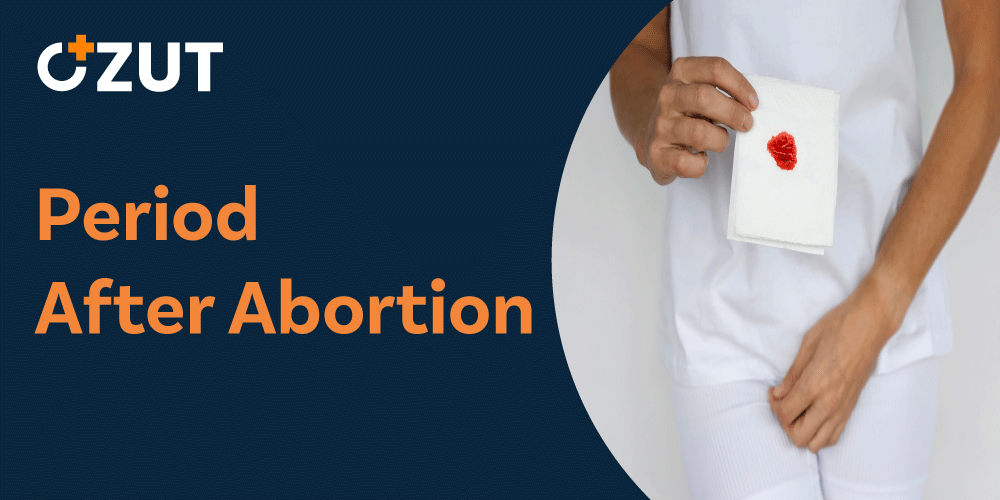
It’s common to bleed for 1–2 weeks after either type of abortion. Some people experience intermittent bleeding that stops and then starts again. The bleeding should gradually taper off after 1-2 weeks, though light bleeding or spotting may continue for several weeks or until your next period begins.
Post-abortion bleeding typically resembles menstrual blood but may be more brown than red in color. The flow is usually heavier following a medication abortion compared to a procedural abortion.
Certain activities can affect the amount of bleeding you experience. Exercise may temporarily increase bleeding, while resting may decrease it. Blood clots can range from small to large, with some potentially as large as a lemon. If large clots occur alongside heavy bleeding for more than 2 hours, contact your healthcare provider for guidance.
Birth Control After Abortion
You can resume using most birth control methods—including pills, patches, condoms, implants, and intrauterine devices (IUDs)—immediately after or within a few days of your abortion.
If you had a second-trimester abortion, you might need to wait approximately 4 weeks before using methods that require insertion, such as diaphragms, cervical caps, or IUDs.
the company birth control methods like the pill may make your post-abortion bleeding lighter and reduce the duration of bleeding. These methods may also help you return to your regular menstrual cycle more quickly.
Sexual Activity After Abortion
Healthcare providers generally recommend waiting until post-abortion bleeding stops—typically about 2 weeks—before resuming vaginal intercourse after either a medication or procedural abortion.
Other Side Effects to Expect
After Medication Abortion
Common side effects following a medication abortion may include:
- Cramping
- Nausea
- Vomiting
- Diarrhea
- Low-grade fever
- Chills
- Headache
- Fatigue
Since fever can also indicate infection, contact your healthcare provider if you experience fever accompanied by body aches, increased bleeding, or pelvic pain.
After Procedural Abortion
Side effects from a procedural abortion may include:
- Nausea
- Vomiting
- Cramping
- Fatigue
- Sweating
Fertility After Abortion
You may begin ovulating approximately 2 weeks after the pregnancy ends, sometimes even earlier. This means pregnancy is possible again even before your first post-abortion period. Discussing birth control options with your healthcare provider is important if you wish to prevent pregnancy.
In most cases, having an abortion does not affect your future fertility. There is some concern that multiple procedural abortions could potentially cause scarring in the uterus from the instruments used during the procedure. This scarring, called intrauterine adhesions, might contribute to fertility challenges in some cases, though this is relatively uncommon.
When to Seek Medical Attention
Contact a healthcare provider immediately if you experience any of these symptoms after an abortion:
- Soaking through two or more pads per hour for more than 2 hours
- Passing a blood clot larger than a lemon
- Severe abdominal or back pain
- Pain that isn’t relieved by prescribed medications
- Fever above 100.4°F (38°C)
- Chills
- Foul-smelling discharge
- Yellow or green discharge
If you’ve had a medication abortion and don’t begin bleeding within 24 hours, inform your healthcare provider. They may need to rule out an ectopic pregnancy or provide a second dose of medication. There’s also a possibility that you might still be pregnant or have had an incomplete abortion requiring follow-up care.
Additionally, consult with your healthcare provider if your period doesn’t return within 8 weeks after your procedure.
Conclusion
Understanding how abortion affects your menstrual cycle can help you navigate the weeks and months following the procedure. While some changes to your cycle are normal and expected, being aware of warning signs that require medical attention is crucial for your health and wellbeing. Most individuals return to their normal menstrual patterns within a few months, and long-term effects on fertility are rare. If you have concerns about your recovery or menstrual cycle after an abortion, don’t hesitate to reach out to your healthcare provider for guidance.